

The part you can check without taking our word for it
No logo wall. Most of the work sits under government contracts we cannot name. These four figures are verifiable.
Registered Government Supplier · EPPU financial grade S8 — tender capacity to S$10M. It is a solvency and capability assessment, not a marketing badge.
Why a procurement grade is the evidence we lead with
The grade is what permits a public agency to award us work. It is assessed by someone other than us, and it is renewed against our accounts rather than our claims.
It is the plainest evidence we can offer that a system we build for you will still have somebody behind it in five years.
We did not start as an AI company
We started in 1988 building B2B systems, and have followed our clients’ problems ever since: into document management, into the public sector’s digital transformation, and now into AI. Most of the recent decades were spent with Singapore government organisations.
That work sets habits. Requirements arrive as compliance obligations, not wish lists. QA is measured against a mandate somebody else wrote. A deployment serving a thousand users has to keep serving them after the project team has gone.
Which is why we can say this: AI that survives contact with a real business is not mainly a modelling problem. It is an integration, data and operations problem, and those we have been solving for a long time.
AI that survives contact with a real business is not mainly a modelling problem. It is an integration, data and operations problem.
What thirty-eight years taught usFour things we will say to your face on the first call
Every consultancy publishes values. These are the four that cost us work, which is the only reason to print them.
We don’t just advise. We build.
The gap between the roadmap and the build is where most of the money goes.
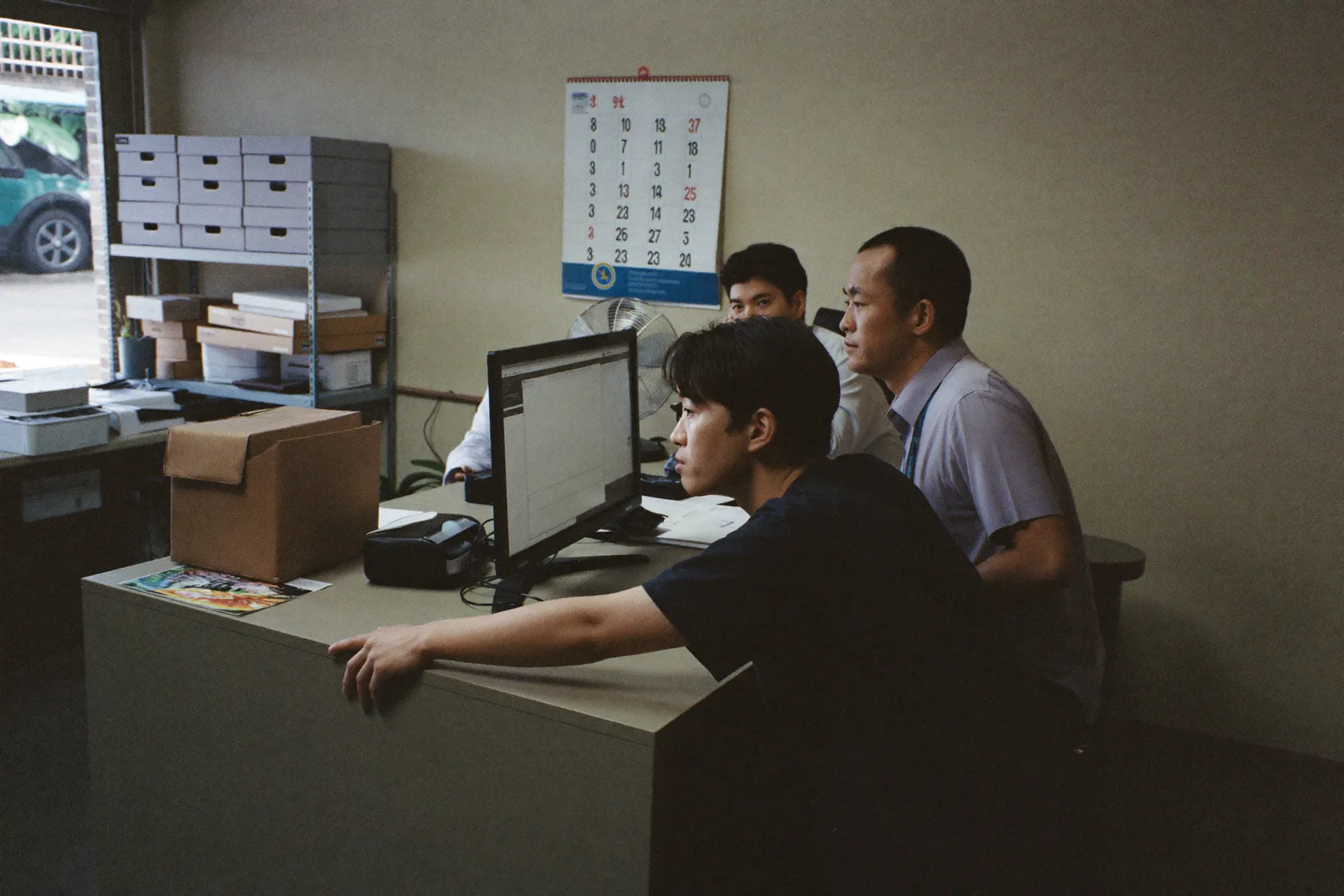
The engineers who build it are the ones who sat in your discovery workshop
Who this works for, and who it does not
Printed in full because a wasted first call costs you more than it costs us.
You will get value quickly
- 15–200 staff in Singapore, with a system of record you already pay for — ERP, CRM, a job or contract system.
- A process that hurts weekly and that somebody could describe in ten minutes.
- One person who can say yes without a committee.
- Distribution, professional services, manufacturing, logistics, retail. The processes that hurt are much the same.
We would be selling you the wrong thing
- Records living mainly in spreadsheets on individual machines. Nothing for an assistant to read.
- A brief that starts with the technology rather than the process.
- A board that needs the case proven before anything is built. Reasonable, but not what a short engagement does.
- Anything where a wrong answer cannot be caught by a person first.
Not sure which side you are on? That is the first ten minutes of the call, free either way.
Talk to us
Come and test the claim
Everything on this page is an assertion. The only way to check one is to give us a real process and a fixed period.
Questions we are happy to be asked
- What have you built closest to my business? We will name it, or say we have not.
- Who exactly would be on this? You meet them before you commit.
- What has gone wrong on a project like mine? There is an answer. Ask for it.
- What happens if we stop? You keep the code, the data and the documentation.